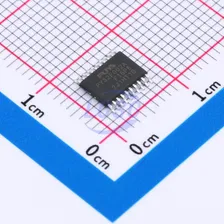

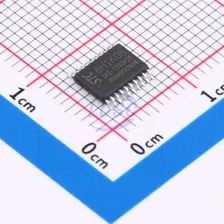
Varnitronics
LPC1517JBD48E NXP
NXP

LPC1517JBD48E

ARM Cortex-M3 32 Bit 72MHz LQFP-48(7x7) Microcontrollers RoHS

LQFP-48(7x7)ROHS3 CompliantActive

32-bit ARM Cortex-M3 microcontroller

Manufacturer
NXP
Manufacturer part #
LPC1517JBD48E
Store part #
C160820
Package / case
LQFP-48(7x7)
Packaging
Tray
Datasheet (PDF)

Every Order Guarantee

100% Authentic · 30-Day Return or Replacement · policy

42 in stock

#C160820

Stock & price checked 33 h ago

QuantityUnit pricePack price
1+₹899.52₹899.52
10+₹857.07₹8,570.70
30+₹831.16₹24,934.80
100+₹809.38₹80,938.00

1 × ₹899.52

₹899.52

excl. GST

₹1,061.43 incl. 18% GST

Need volume or a scheduled delivery? Request a quote
  • Dispatch in 15-18 working days
  • GST invoice with every order
  • Standard pack: 250 per tray

LPC1517JBD48E

₹899.52 for 1 + GST

Need this with the rest of your board? Upload the BOM — we price every line.Upload BOM

Specifications

ADC (Bit)
12bit
Number of I/O
32
Operating Temperature
-40℃~+105℃
Program Memory Type
FLASH
Voltage - Supply
2.4V~3.6V
EEPROM
4KB
Program Storage Size
64KB
CPU Core
ARM Cortex-M3
Core Size
32 Bit
CPU Maximum Speed
72MHz
Oscillator Type
Built-in

Packaging & compliance

RoHS
ROHS3 Compliant
Lifecycle
Active
ECCN
3A991A2
Packaging
Tray
Standard pack
250 / Tray
Sold per
Piece
Minimum order
1
Unit weight
1.652 g

Overview

The LPC15xx are ARM Cortex-M3 based microcontrollers for embedded applications featuring a rich peripheral set with very low power consumption. The ARM Cortex-M3 is a next generation core that offers system enhancements such as enhanced debug features and a higher level of support block integration. The LPC15xx operate at CPU frequencies of up to 72 MHz. The ARM Cortex-M3 CPU incorporates a 3-stage pipeline and uses a Harvard architecture with separate local instruction and data buses as well as a third bus for peripherals. The ARM Cortex-M3 CPU also includes an internal prefetch unit that supports speculative branching. The LPC15xx includes up to 256 kB of flash memory, 32 kB of ROM, a 4 kB EEPROM, and up to 36 kB of SRAM. The peripheral complement includes one full-speed USB 2.0 device, two SPI interfaces, three USARTs, one Fast-mode Plus I²C -bus interface, one C_CAN module, PWM/timer subsystem with four configurable, multi-purpose State Configurable Timers (SCTimer/PWM) with input pre-processing unit, a Real-time clock module with independent power supply and a dedicated oscillator, two 12-channel/12-bit, 2 Msamples/s ADCs, one 12-bit, 500 kSamples/s DAC, four voltage comparators with internal voltage reference, and a temperature sensor. A DMA engine can service most peripherals.

Applications

  • Industrial control
  • Home appliances
  • Medical equipment
  • Motor control
  • Power management
  • Data acquisition systems
  • Automation equipment
  • Sensor networks
  • Communication modules

Key features

  • ARM Cortex-M3 processor (version r2p1), running at frequencies of up to 72 MHz.
  • ARM Cortex-M3 built-in Nested Vectored Interrupt Controller (NVIC).
  • System tick timer.
  • Serial Wire Debug (SWD) with four breakpoints and two watchpoints.
  • Single-cycle multiplier supported.
  • Memory Protection Unit (MPU) included.
  • Up to 256 kB on-chip flash programming memory with 256 Byte page write and erase.
  • Up to 36 kB SRAM.
  • 4 kB EEPROM.
  • ROM API support:
  • Boot loader with boot options from flash or external source via USART, C_CAN, or USB
  • USB drivers
  • ADC drivers
  • SPI drivers
  • USART drivers
  • I²C drivers
  • Power profiles and power mode configuration with low-power mode configuration option
  • DMA drivers
  • C_CAN drivers
  • Flash In-Application Programming (IAP) and In-System Programming (ISP).
  • Digital peripherals:
  • Simple DMA engine with 18 channels and 20 programmable input triggers.
  • High-speed GPIO interface with up to 76 General-Purpose I/O (GPIO) pins with configurable pull-up/pull-down resistors, open-drain mode, input inverter, and programmable digital glitch filter.
  • GPIO interrupt generation capability with boolean pattern-matching feature on eight external inputs.
  • Two GPIO grouped port interrupts.
  • Switch matrix for flexible configuration of each I/O pin function.
  • CRC engine.
  • Quadrature Encoder Interface (QEI).
  • Configurable PWM/timer/motor control subsystem:
  • Up to four 32-bit counter/timers or up to eight 16-bit counter/timers or combinations of 16-bit and 32-bit timers.
  • Up to 28 match outputs and 22 configurable capture inputs with input multiplexer.
  • Up to 28 PWM outputs total.
  • Dither engine for improved average resolution of pulse edges.
  • Four State Configurable Timers (SCTimers) for highly flexible, event-driven timing and PWM applications.
  • SCT Input Pre-processor Unit (SCTIPU) for processing timer inputs and immediate handling of abort situations.
  • Integrated with ADC threshold compare interrupts, temperature sensor, and analog comparator outputs for motor control feedback using analog signals.
  • Special-application and simple timers:
  • 24-bit, four-channel, multi-rate timer (MRT) for repetitive interrupt generation at up to four programmable, fixed rates.
  • Repetitive interrupt timer for general purpose use.
  • Windowed Watchdog timer (WWDT).
  • High-resolution 32-bit Real-time clock (RTC) with selectable 1 s or 1 ms time resolution running in the always-on power domain. RTC can be used for wake-up from all low power modes including Deep power-down.
  • Analog peripherals:
  • Two 12-bit ADC with up to 12 input channels per ADC and with multiple internal and external trigger inputs and sample rates of up to 2 Msamples/s. Each ADC supports two independent conversion sequences. ADC conversion clock can be the system clock or an asynchronous clock derived from one of the three PLLs.
  • One 12-bit DAC.
  • Integrated temperature sensor and band gap internal reference voltage.
  • Four comparators with external and internal voltage references (ACMP0 to 3). Comparator outputs are internally connected to the SCTimer/PWMs and ADCs and externally to pins. Each comparator output contains a programmable glitch filter.
  • Serial interfaces:
  • Three USART interfaces with DMA, RS-485 support, autobaud, and with synchronous mode and 32 kHz mode for wake-up from Deep-sleep and Power-down modes. The USARTs share a fractional baud-rate generator.
  • Two SPI controllers.
  • One I²C -bus interface supporting fast mode and Fast-mode Plus with data rates of up to 1Mbit/s and with multiple address recognition and monitor mode.
  • One C_CAN controller.
  • One USB 2.0 full-speed device controller with on-chip PHY.
  • Clock generation:
  • 12 MHz internal RC oscillator trimmed to 1 % accuracy for -25 ℃ ≤ Tamb ≤ +85 ℃ that can optionally be used as a system clock.
  • Crystal oscillator with an operating range of 1 MHz to 25 MHz.

Same category

More in Microcontrollers

View all