
Varnitronics
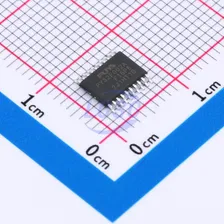
MC9S08JM60CQH NXP
NXP

MC9S08JM60CQH

S08 8 Bit 48MHz LQFP-64(14x14) Microcontrollers RoHS

LQFP-64(14x14)ROHS3 CompliantActive

HCS08 Microcontrollers

Manufacturer
NXP
Manufacturer part #
MC9S08JM60CQH
Store part #
C1337788
Package / case
LQFP-64(14x14)
Packaging
Tray
Datasheet (PDF)

Every Order Guarantee

100% Authentic · 30-Day Return or Replacement · policy

4 in stock

#C1337788

Stock & price checked 14 h ago

QuantityUnit pricePack price
1+₹2,509.98₹2,509.98
10+₹2,383.44₹23,834.40
30+₹2,164.27₹64,928.10
100+₹1,972.94₹1,97,294.00

1 × ₹2,509.98

₹2,509.98

excl. GST

₹2,961.78 incl. 18% GST

Need volume or a scheduled delivery? Request a quote
  • Dispatch in 15-18 working days
  • GST invoice with every order
  • Standard pack: 420 per tray

MC9S08JM60CQH

₹2,509.98 for 1 + GST

Need this with the rest of your board? Upload the BOM — we price every line.Upload BOM

Specifications

ADC (Bit)
12bit
Number of I/O
51
Operating Temperature
-40℃~+85℃
Voltage - Supply
2.7V~5.5V
Program Memory Type
FLASH
EEPROM
256Byte
Program Storage Size
60KB
CPU Core
S08
Core Size
8 Bit
CPU Maximum Speed
48MHz
Oscillator Type
Built-in

Packaging & compliance

RoHS
ROHS3 Compliant
Lifecycle
Active
ECCN
EAR99
Packaging
Tray
Standard pack
420 / Tray
Sold per
Piece
Minimum order
1
Unit weight
7 g

Overview

Key features

  • 48-MHz HCS08 CPU (central processor unit)
  • 24-MHz internal bus frequency
  • HC08 instruction set with added BGND instruction
  • Background debugging system
  • Breakpoint capability to allow single breakpoint setting during in-circuit debugging (plus two more breakpoints in on-chip debug module)
  • In-circuit emulator (ICE) debug module containing two comparators and nine trigger modes. Eight deep FIFO for storing change-of-flow addresses and event-only data. Debug module supports both tag and force breakpoints.
  • Support for up to 32 interrupt/reset sources
  • Up to 60 KB of on-chip in-circuit programmable flash memory with block protection and security options
  • Up to 4 KB of on-chip RAM
  • 256 bytes of USB RAM
  • Clock source options include crystal, resonator, external clock MCG (multi-purpose clock generator) — PLL and FLL; internal reference clock with trim adjustment
  • Optional computer operating properly (COP) reset with option to run from independent 1-kHz internal clock source or the bus clock
  • Low-voltage detection with reset or interrupt
  • Illegal opcode detection with reset
  • Illegal address detection with reset
  • Wait plus two stops
  • USB — USB 2.0 full-speed (12 Mbps) device controller with dedicated on-chip USB transceiver, 3.3-V regulator and USBDP pull-up resister; supports control, interrupt, isochronous, and bulk transfers; supports endpoint 0 and up to 6 additional endpoints; endpoints 5 and 6 can be combined to provide double buffering capability
  • ADC — 12-channel, 12-bit analog-to-digital converter with automatic compare function; internal temperature sensor
  • ACMP — Analog comparator with option to compare to internal reference; operation in stop3 mode
  • SCI — Two serial communications interface modules with optional 13-bit break LIN extensions
  • SPI — Two 8- or 16-bit selectable serial peripheral interface modules with a receive data buffer hardware match function
  • IIC — Inter-integrated circuit bus module to operate at up to 100 kbps with maximum bus loading; multi-master operation; programmable slave address; interrupt-driven byte-by-byte data transfer; 10-bit addressing and broadcast modes support
  • Timers — One 2-channel and one 6-channel 16-bit timer/pulse-width modulator (TPM) modules: Selectable input capture, output compare, and edge-aligned PWM capability on each channel. Each timer module may be configured for buffered, centered PWM (CPWM) on all channels
  • KBI — 8-pin keyboard interrupt module
  • RTC — Real-time counter with binary- or decimal-based prescaler
  • Up to 51 general-purpose input/output pins
  • Software selectable pullups on ports when used as inputs
  • Software selectable slew rate control on ports when used as outputs
  • Software selectable drive strength on ports when used as outputs
  • Master reset pin and power-on reset (POR)
  • Internal pullup on RESET, IRQ, and BKGD/MS pins to reduce customer system cost
  • 64-pin quad flat package (QFP)
  • 64-pin low-profile quad flat package (LQFP)
  • 48-pin quad flat no-lead (QFN)
  • 44-pin low-profile quad flat package (LQFP)

Same category

More in Microcontrollers

View all